


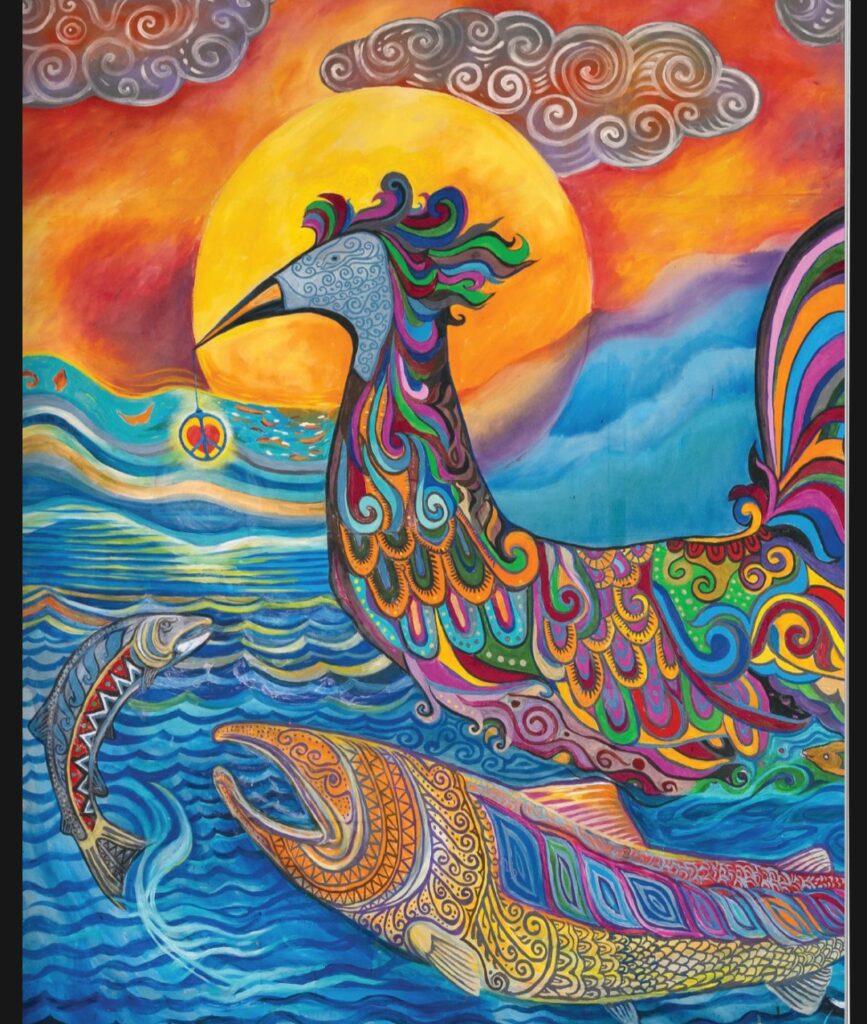
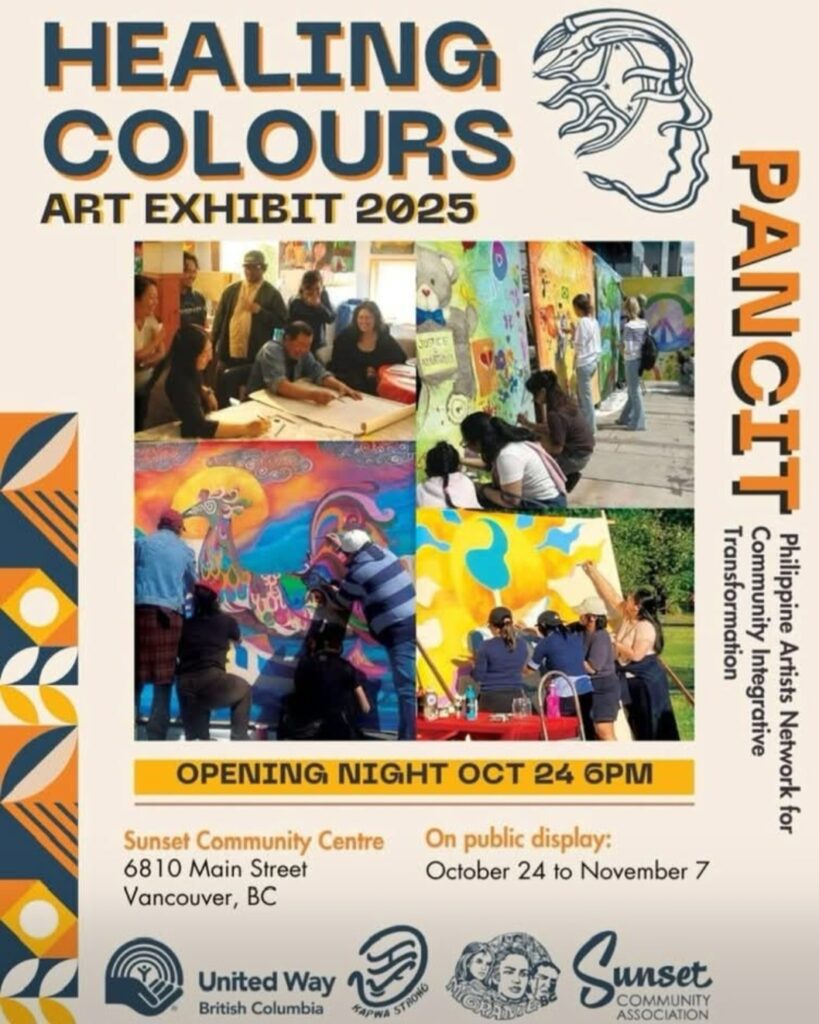
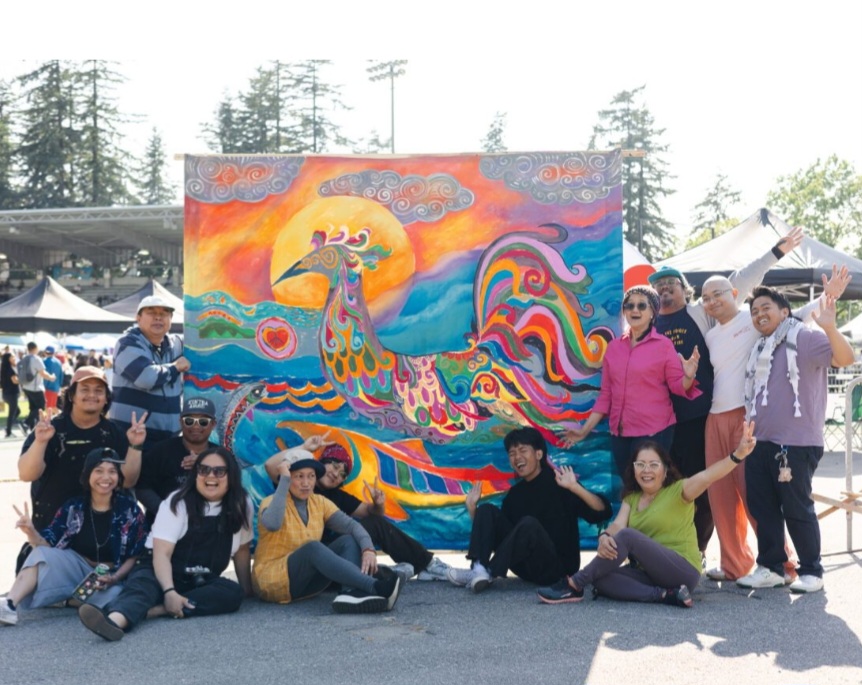
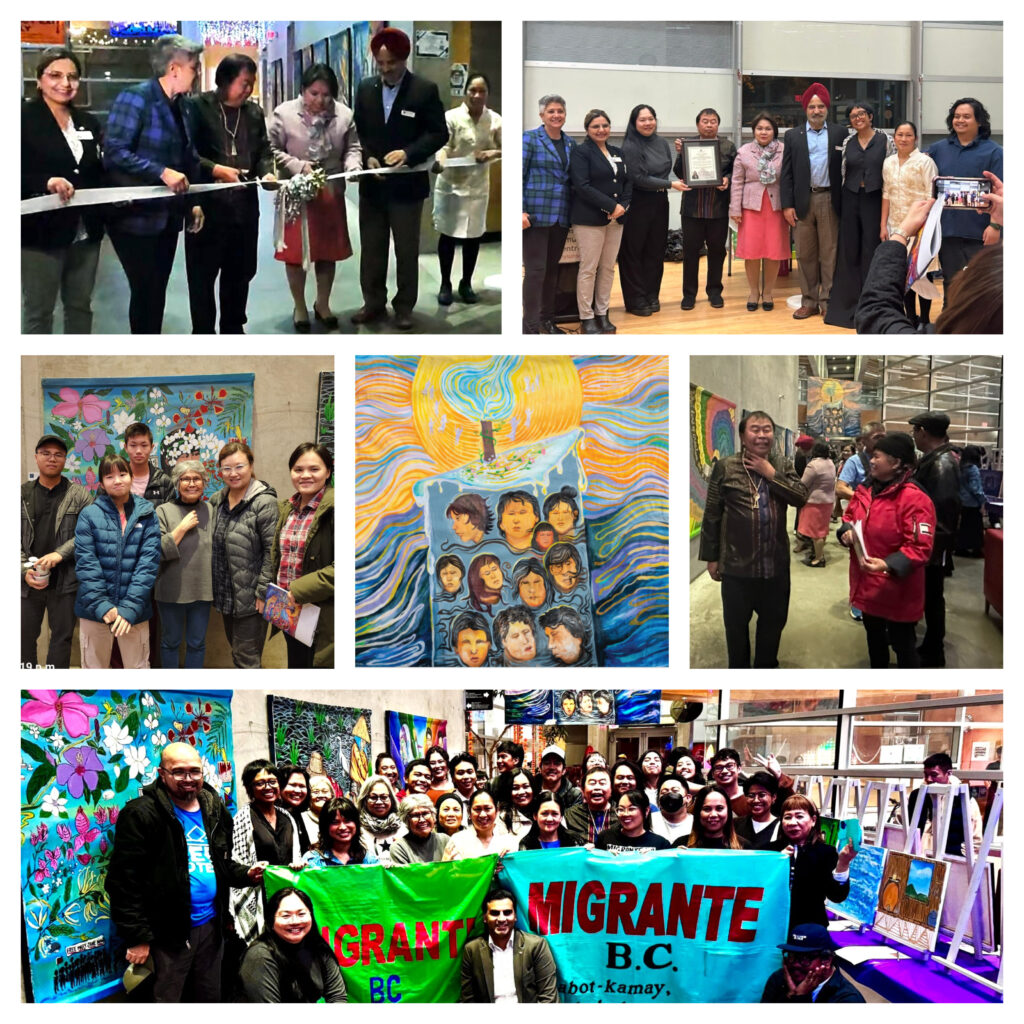
The recent community painting workshop organized by the Philippine Artists Network for Community Integrative Transformation (PANCIT) and Migrante British Columbia became a quiet but powerful testament to the healing power of art. Culminating in the Healing Colours Art Exhibit*, the project was conceived by internationally acclaimed visual artist Bert Monterona and his partner, Mylene Maranoc, in response to the tragic Lapu-Lapu incident. Out of grief, they envisioned a space where colour, creativity, and compassion could help a wounded community rediscover hope.
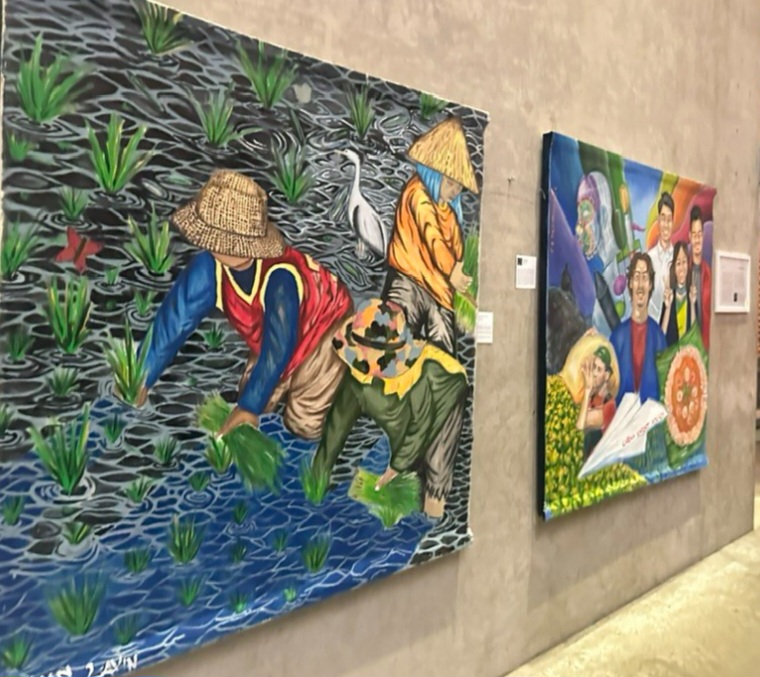
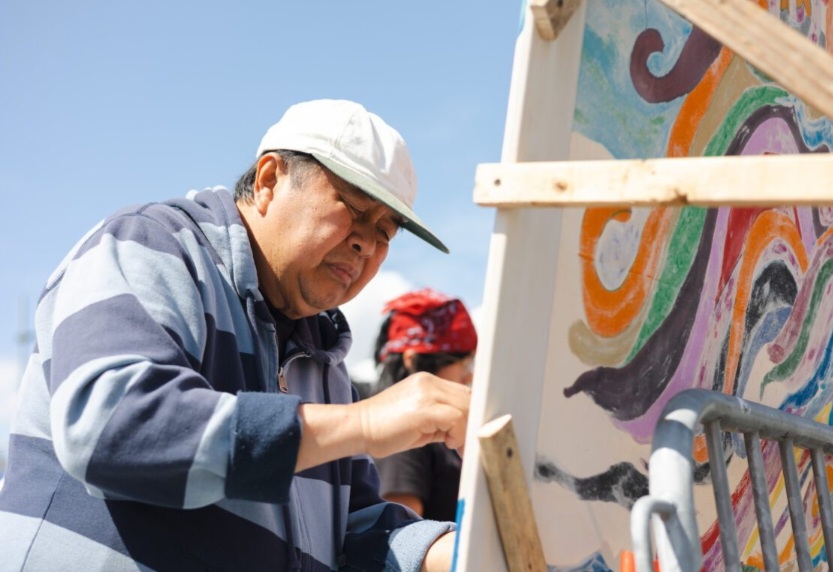
For four months, painters from all walks of life in Vancouver—first-timers and emerging artists alike—gathered to share stories, mix pigments, and find meaning in collective expression. The studio walls gradually bloomed with colour, each canvas a distinct voice in a growing chorus of resilience. What began as a workshop became a living ritual of renewal, where art served as both mirror and medicine.
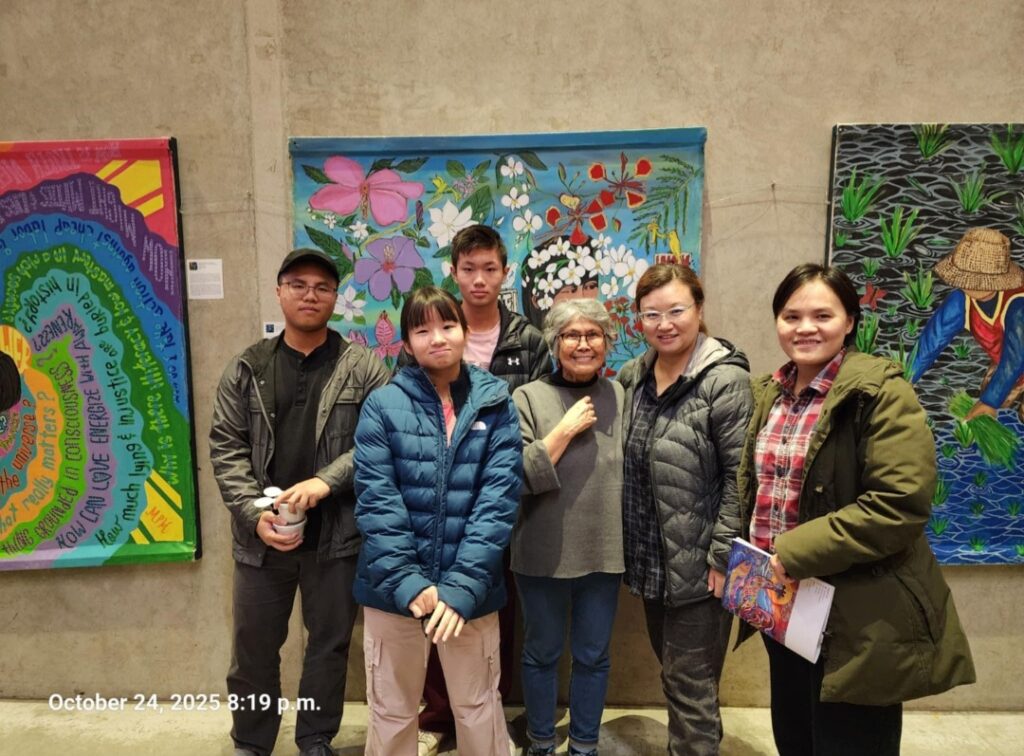
Among the works, Erie Maestro’s 5 feet-by-5-feet mural stands out as a striking testament to colour, history, and defiance. Philippine flowers unfurl across the canvas—calachuchi, ilang-ilang, bougainvillea, sampaguita, gumamela, and the blazing petals of a fire tree. Each bloom embodies both beauty and memory, whispering stories of struggle and survival. The flowers serve as a metaphor for healing: the slow, often painful process of growing again after loss. Maestro’s luminous palette pulses with emotion—the red of defiance, the gold of memory, the purple of survival—each petal carrying the weight of untold stories of migrant workers enduring injustice, yet continuing to bloom.
A yellow ribbon flutters from the fire tree’s branch, a quiet echo of the nation’s call to free the Filipino people from Marcos Sr. Maestro reclaims this symbol to tell another story: that of Mary Jane Veloso, the Filipina migrant worker imprisoned for fourteen years in Indonesia and still confined in the Philippines. Her haunting face, framed by a cascade of flowers, gazes beyond the canvas—not in despair, but with quiet resolve. White petals unfurl around her like proclamations of courage, suggesting both confinement and release. Through this visual poetry, Maestro transforms Veloso’s portrait into a meditation on freedom, reminding viewers that healing, like blooming, is an act of defiance.
Scattered through the mural are dates etched like scars: 2010, when Veloso was arrested in Indonesia for a crime she did not commit; 2015, when she was sent to death row despite worldwide calls for her freedom; and 2024, when she returned home only to be jailed again. Around these fragments of time, silhouettes rise in unison—faceless yet powerful—embodying the chorus demanding her freedom. Above them, doves soar into a painted sky, their wings catching light like fragile prayers. The fire tree’s red blooms, once symbols of ritual and renewal in the Mountain Province, now blaze as emblems of resistance. Each petal seems to pulse with longing—for justice, for release, for dignity.
Maestro’s mural is more than art; it is a field of remembrance. The flowers cease to be mere ornaments—they are declarations. They defend Veloso’s image, illuminate it, insist on her humanity. Through colour and form, Maestro demonstrates that beauty itself can be a form of resistance, and that art, when rooted in empathy, becomes a force for liberation.
The art exhibit echoed this spirit of unity and transformation. Each painting, distinct in style and story, contributed to a shared narrative: art as community, and community as art. The exhibit’s success lay not only in the beauty of its pieces but in the dialogue they created—between artists and viewers, grief and gratitude, brokenness and healing.
Healing Colours was more than an exhibition*—it was a blossoming. Through brushes, pigments, shared stories, and silent gestures, a community rediscovered its capacity to hope. The flowers that bloomed on the canvases were not mere symbols of beauty, but of persistence—proof that even in the hardest soil, life and art can grow.
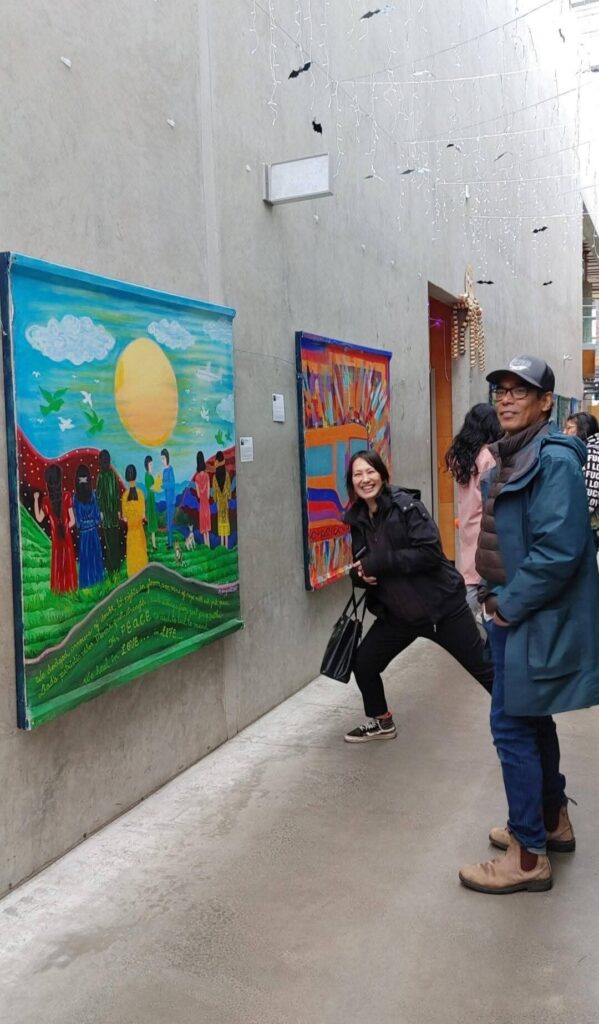
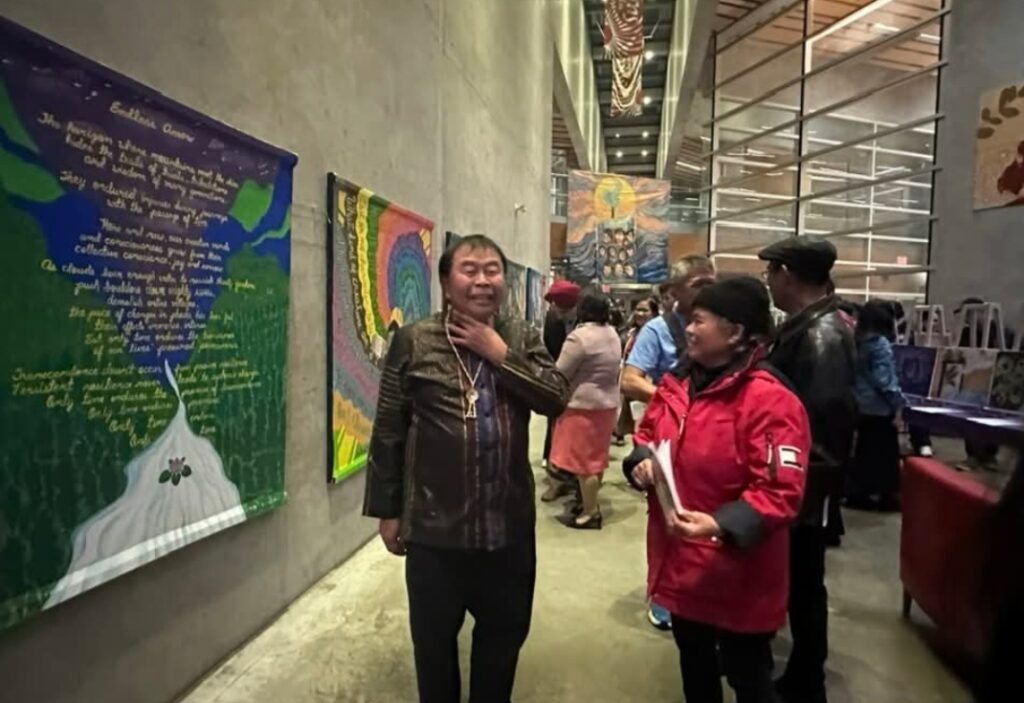
In Maestro’s luminous petals, and across the works of the Healing Colours Art Exhibit, we find a simple truth: in creating together, people heal together. Like flowers reaching for light, they remind us that beauty, courage, and compassion will always find their way to bloom. Perhaps, one day, Maestro’s mural could be offered to Veloso herself—a gift of colour and conviction upon her long-awaited release. It is a painted promise that freedom is possible. This is the quiet message Maestro’s mural delivers: that art, like hope, endures until the bars finally open. (lvq)###
*Update: The Healing Colours Art exhibit has been extended to November 30, 2025, at the Sunset Community Centre, 6810 Main Street, Vancouver. Hours: Hours: Monday – Friday, 9:00 am -9:30pm | Saturday- Sunday, 9:00 am -5:00pm | November 11, 9:00 am -9:30pm, Admission: Free