

BY: MIGRANTE CANADA
Asog is a multi-award winning film produced and directed by Seán Devlin and written by Rey Aclao, Devlin, and Arnel Pablo. The docufiction film tells the story of the residents of Sicogon Island in Iloilo whose lands were stolen in the aftermath of Typhoon Haiyan/Yolanda by the Philippines’ largest real estate company Ayala Land Inc.
In Visaya (Cebuano, Hiligaynon, Waray, etc.), the word “asog” traditionally refers to a feminine man or an effeminate male who takes on women’s roles, often associated with being a shaman, healer, or spiritual leader in precolonial times.
The film which was released in 2023 continues to meet success and support at film festivals and screenings around the world – from awards, to special mentions, to nominations. Asog which incorporates both fictionalized and documentary elements in the film was described by Time Magazine as “a remarkable victory of society’s poorest over entrenched corporate interests.”
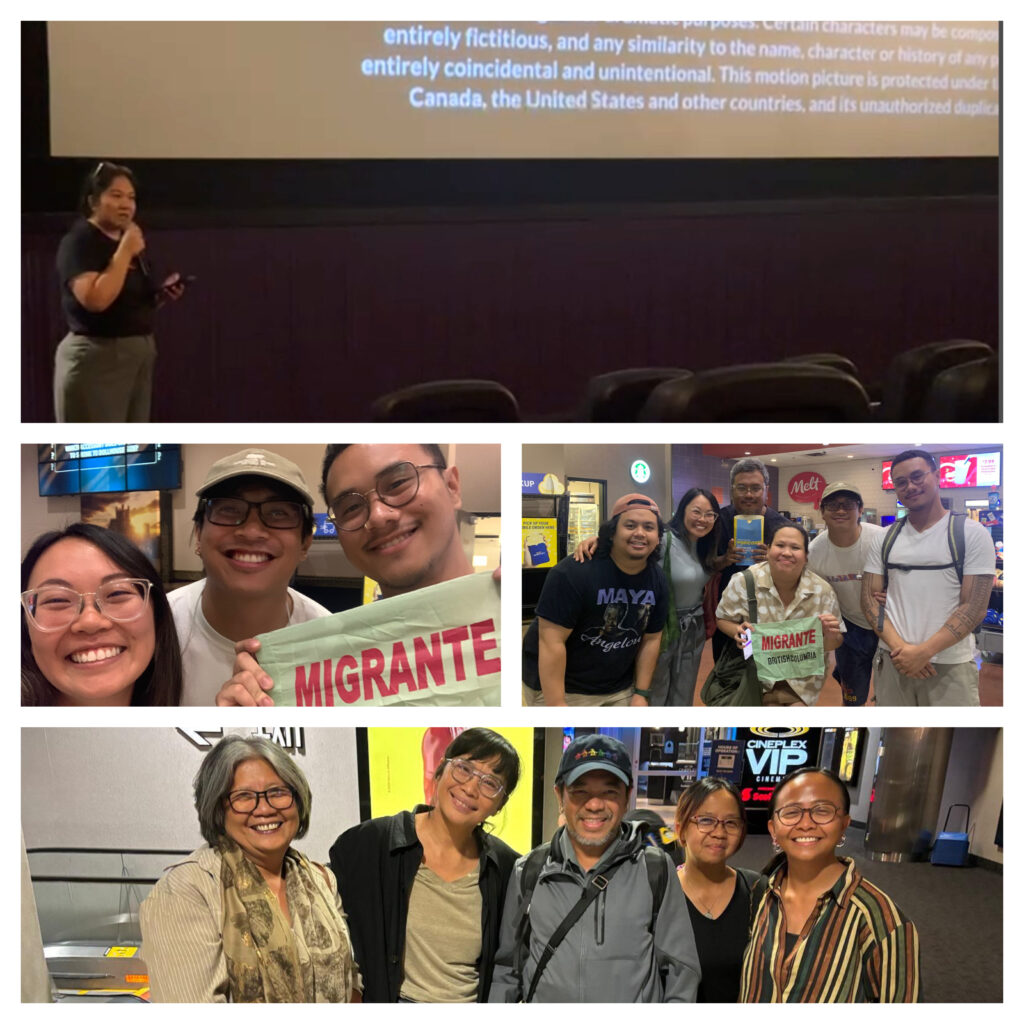
Migrante Canada and its 14-member organizations proudly endorsed the film ASOG that was shown in 14 Cineplex theatres in several cities across Canada from August 22 to 28. Information about the film, reviews, history of the film, etc. are in AsogFilm.com
There are updates from the AsogFilm.com on the reparations owed to the 784 displaced families of Sicogon. Asog film audiences have proven that the more people know what Ayala Land Inc did in Sicogon, the faster the corporation pays the reparations they owe. Seven million Canadian dollars {$7 million CAD) has already been paid, but there’s still another 19% of the funding left unpaid. They also owe the community deeds to their land. “When thousands of you put pressure on Ayala Land Inc using Instagram, they paid half a million dollars in reparations within 48 hours!”
From TIME magazine: “Following Asog’s success on the festival circuit, Ayala eventually started listening to residents’ demands and has agreed to pay $7 Million Canadian in reparations to 784 displaced families. Most of the cash has been used to build 474 new storm-resistant homes within easy reach of the ocean. Still, the local community continues to fight with Ayala over the deeds. Amelia Dela Cruz, president of the Federation of Sicogon Island Farmers Fisherfolks Association (FESIFFA), said in a statement. “We won’t give up until they fully comply with the agreement they signed and we have been given the titles to our land.”

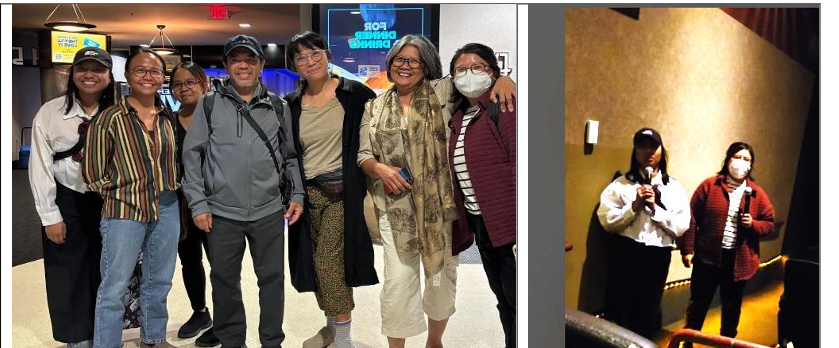
Below is the message from Migrante BC Vice Chair Diane Zapata at the Aug 22 screening of Asog at the Vancouver Cineplex Odeon International Village.
Hello. I am Diane Zapata from Migrante BC, a grassroots non-profit organization of migrant Filipinos and allies in solidarity. We at Migrante BC firmly believe in organizing migrant Filipinos to collectively advocate for our democratic rights.
We are thankful and honoured to be with film director Mr. Seán Devlin and the rest of the team today to bring to light a very important issue of land grabbing in our home country, the Philippines. For my part, allow me in the span of six (6) minutes or so to trace this history, connect it to recent cases of “disaster capitalism,” and show how all of this pushes people into forced migration abroad.
The history of land grabbing in the Philippines is not just about a piece of property or space — it is about the story of survival, dignity, and resistance of our people. For centuries, Filipinos have been denied genuine access to land, and this unresolved problem is at the heart of poverty, displacement, and the longest-running armed revolution in the world.
The roots go back to the Spanish colonial period during which fertile lands were concentrated in the hands of Spanish elites and the Church. Filipino peasants became tenants, paying tribute and rendering forced labor under the encomienda system and friar estates. This exploitation of our people fueled the agrarian unrest and the Philippine Revolution of 1896.
Under the American colonialization, the Land Registration Act of 1903 legitimized elite ownership. Only the learned and with means to pay the cost were able to register vast areas of land. Plantations for sugar, abaca, and pineapple expanded and dispossessed the peasants and Indigenous peoples.
Post WWII and after the supposed “independence” from the US, land reform laws repeatedly failed. Presidential Decree 27, under then President Ferdinand Marcos, promised land but excluded vast haciendas and plantations. Marcos cronies engaged in massive land grabbing for logging and infrastructure. This intensified peasant uprisings and swelled the ranks of the Communist Party of the Philippines and New People’s Army. This is part of why the armed revolution continues to this day.
Even after the1986 people power uprising, the Comprehensive Agrarian Reform Program (CARP) was riddled with loopholes. Landlords evaded redistribution through land conversions and stock schemes, as seen in Hacienda Luisita. Up to today, peasants, fisherfolk, and Indigenous peoples are still displaced by mining, dams, plantations, and eco-tourism projects.
Today, we now see a new face of land grabbing: disaster capitalism — when disasters become opportunities to seize land.
After Super Typhoon Haiyan/Yolanda in 2013, the government declared wide “no-build zones.” Thousands of coastal families were displaced, but malls and resorts soon reappeared in the same areas.
As in the film, in Sicogon Island, Iloilo, Ayala Land Inc. advanced a tourism estate after Typhoon Yolanda destroyed villages, displacing fisherfolk. In the community areas that I myself integrated with for organizing, the urban poor and the fisherfolk of Tacloban City were barred from repairing their houses in the coastal areas, forcing them to relocate far from their previous homes and livelihood.
In Marawi, in Lanao del Sur, Mindanao, after the 2017 siege, residents were barred from returning to the “Most Affected Area,” with redevelopment plans threatening to erase ancestral ownership.
These show how disasters are used to clear land of the poor and make way for investors.
When people lose land, they lose livelihood. Farmers without farms, fisherfolk without fishing grounds, urban poor without secure homes — what options remain?
In Tacloban North relocation sites in Leyte, Haiyan/Yolanda survivors were resettled far from work, schools, and water. Many abandoned their homes and some were forced to seek work in other cities or regions or abroad. The same happened with Maranao families displaced by the Marawi war, and with Aeta communities pushed aside by New Clark City in Capas, Tarlac.
This is the pattern: land grabbing and displacement push people into migration, and the Philippines’ labour export policy turns this into deployment of overseas workers. Studies after Haiyan/Yolanda showed increased migration from Eastern Visayas, with even mothers reporting they were “forced to migrate for work” after being uprooted.
Forced migration, then, is not simply about opportunity. It is often the consequence of landlessness and displacement at home.
Land grabbing has been a thread through our history — from Spanish friar estates to modern disaster capitalism. It not only deepens poverty and inequality, but also drives the migration of millions of Filipinos, scattering our people across the globe. To understand the Filipino diaspora, we must recognize that it begins with displacement at home.
Migrante BC believes our fight as migrants is not just about our welfare abroad. We must also confront the root causes of our diaspora. Migration is rarely a free choice. It is the result of poverty, landlessness, and exploitation, conditions worsened by land grabbing and disaster-driven displacement.
This is why we organize: to defend our rights and dignity here in Canada, but also to stand in solidarity with the farmers, fisherfolk, workers, and Indigenous peoples resisting displacement in the Philippines. We connect our struggles here with theirs, because until the root causes are addressed, our people will continue to be forced abroad.
In winning this struggle with your solidarity, only then will migration truly become a choice, not a necessity.
Only then we can have our land back and say that we can truly come home.###