

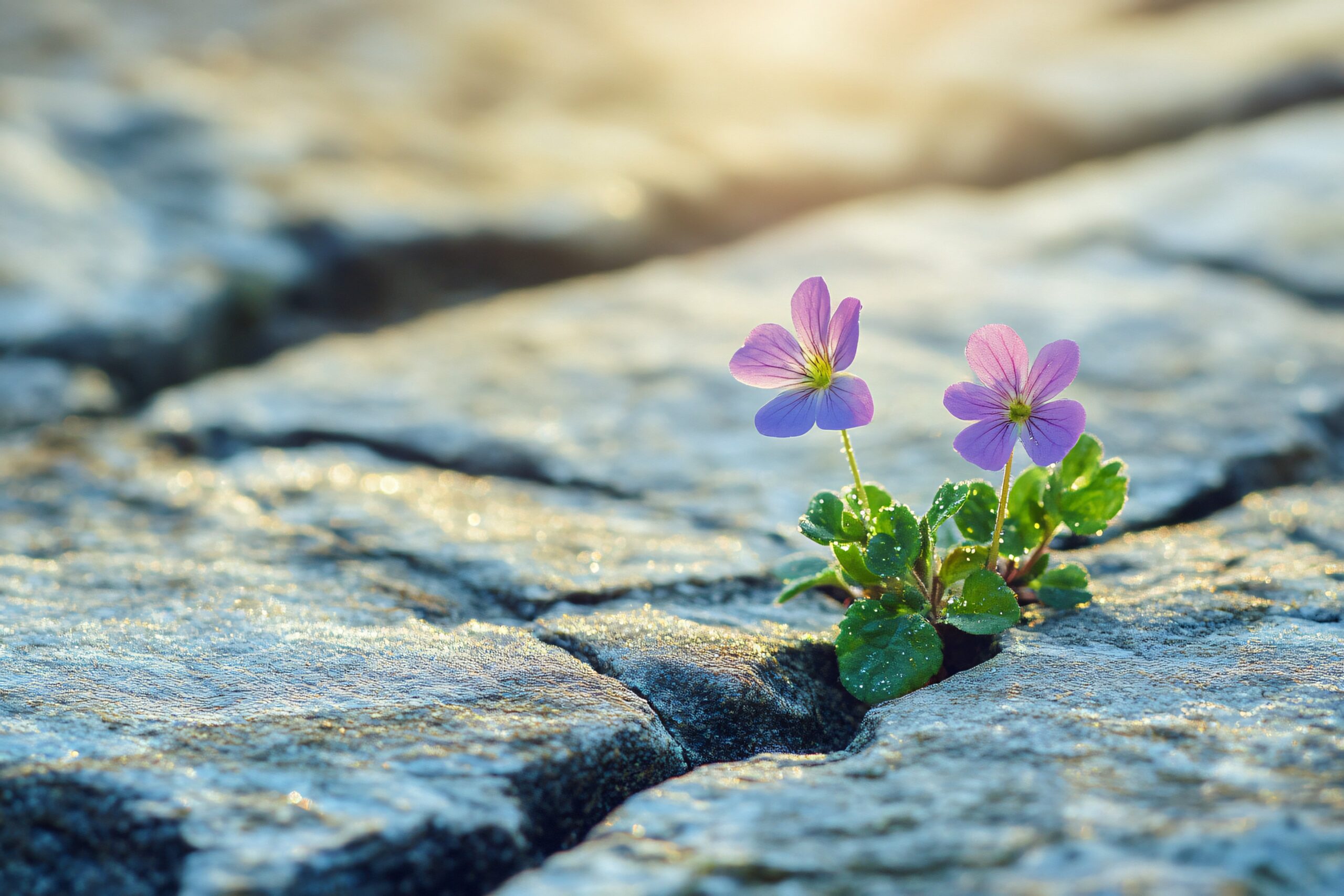
By: Dr. Leonora C. Angeles | July 1, 2026
Resilience is commonly held by many as desirable human characteristic or cherished value, based on inherited common wisdom or an unquestioned socio-cultural assumption. In academic research, resilience is considered a “highly contested analytical concept.” It has been long deployed conceptually and empirically in many disciplines – from anthropology, education and geography, to psychology, social work and zoology. Often defined as the ability to bounce back or recover after major crises or setbacks, the concept has also become central to academic and practitioner research on development work, particularly peoples’ livelihoods.
Filipinos, including those in the diaspora, do not have monopoly in claiming resilience as a national cultural trait. We could think of many other nationalities – Palestinians, Ukrainians, Iranians, Afghans, Vietnamese, South Africans to name a few – who could also proudly call themselves resilient. Resilience in this sense has become synonymous to struggle.
Philippine-based Filipinos often invoke struggle or resistance — more often than resilience –precisely because the word has no direct translation in our three major languages – Cebuano, Tagalog, Ilocano. Their approximate words for resilience often mean strength, endurance or perseverance. For example, Cebuanos use kalig-on to refer to their strength or stability, which they need in pakigbisog, or fighting for a cause. Padayon is also another indirect translation of resilience, which means to continue or moving forward. In Ilocano, the parallel words are anus/anuska used as encouragement to keep on going. Likewise, the Ilocano word salukag means having vigilance or fighting spirit when faced with crises.
In the article “Worlding the intangibility of resilience: the case of rice farmers and water- related risks in the Philippines,” I co-wrote with my former graduate student Sameer Shah, now professor at the University of Wahington, and University of British Columbia (UBC) colleague Leila Harris for World Development, we likewise found that Tagalog-speaking small rice farmers narrated resilience in terms of their courage (lakas ng loob), abilities (husay, abilidad) and strategies (diskarte) to address loss and damage to their livelihoods because of water shortage, drought or disasters, often linked to climate change.
These word substitutes for resilience are often linked to affect, emotions and beliefs around their optimism, faith, and hope for brighter futures, flowing from their relationships with the universe or cosmos. Tagalog farmers, and presumably other farmers across the country, naturalize life’s hardships as cyclical, making these equivalent words for “resilience” their intrinsic characteristic based on their strong belief in God or the Divine’s protection and in their own capabilities to persist in times of crises. We argued that farm livelihood resilience draws from intangible sources “constituted through farmers’ particular ‘worldings,’ or constructions of reality where knowledge, belief systems, and relations, are lived and enacted on an everyday basis.”
Language use and translation are keys to understanding the origins, usages and purposes of particular concepts such as resilience. In this light, one could argue that Filipinos scattered across predominant English-speaking countries (e.g. the United States, United Kingdom, Canada, Australia) are largely responsible for invoking and propagating “resilience” as among our core identifying characteristics.
Resilience in the diaspora is often discussed in the context of hardships and struggles faced as Filipino immigrants or migrant workers abroad who likely interpret resilience in terms of the above approximate or substitute words in Philippine Indigenous languages. Indeed, situating ourselves in our unique and local contexts help illuminate our own various sources of tangible and intangible resilience.
What Filipino Canadians and other in the diaspora need to remain vigilant when invoking resistance are two things.
First, resilience can be active or inactive. I called the latter “inert resilience” in another journal article, “Inert Resilience and Institutional Traps: Tackling Bureaucratic Inertias Towards Transformative Social Learning and Capacity Building for Local Climate Change Adaptation” for Planning Theory & Practice, co-written with my former graduate students, now professional urban planners, Victor D Ngo and Zoë Greig.
Diasporic communities demonstrate inert resilience – a form of inertia — when we tend to undertake incremental changes that are not transformative, but rather conserve systems of power and inequalities. In this sense, resilience can be dead, or a dead-end, leading nowhere.
Second, active resilience as a form of resistance can be transformative. It involves critical thinking and our exercise of collective agency to inquire and transform the very inequitable and unjust systems demanding us to be resilient in the first place. Resilience-as-resistance can be powerful weapons of both the weak and the strong. Long live resilience-as-resistance!
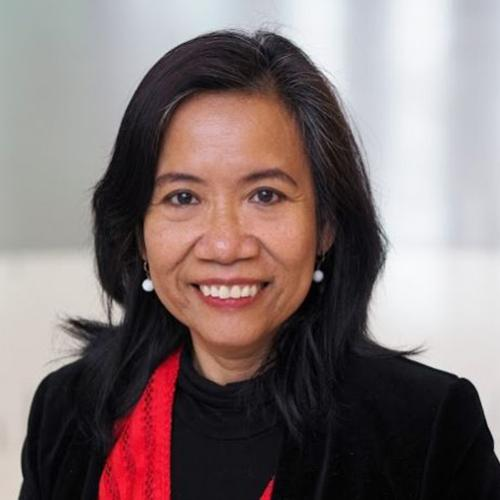
Dr. Leonora C. Angeles is cross-appointed professor at the University of British Columbia (UBC) School of Community and Regional Planning and the Institute for Gender, Race, Sexuality, and Social Justice. As faculty affiliate at the UBC Centre for Human Settlements (CHS) and the Centre for Southeast Asian Research (CSEAR), she worked on number of applied research and capacity-building research projects in Brazil, Vietnam, Thailand, and the Philippines, related to community and international development studies, social policy, participatory planning and governance, participatory action research, and transnational feminist networks, particularly in Southeast Asia.
***


