


Chris Sorio | April 23, 2026
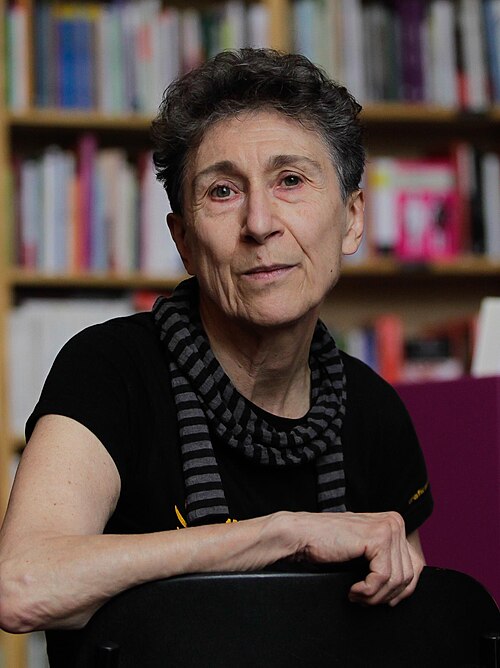
Chris Sorio, activist-scholar, graduate student at York University, introduced eminent feminist activist and scholar Dr. Silvia Federici, the main speaker at the April 23rd viral public lecture at York University, Reading the past to unchain the present: Women, war and social reproduction.
Dr. Silvia Federici is Emerita Professor of Political Philosophy and International Studies at Hofstra University (Hempstead, New York). She is a world renowned feminist intellectual and longtime activist, teacher, and writer. In 1972 she was one of the founders of the International Feminist Collective that launched the Campaign for Wages for Housework in the US and abroad. She has been active in the anti-globalization movement and the anti-death penalty movement.
Sorio said, “I had the opportunity to attend the summer class with Silvia Federici. What stayed with me wasn’t just her theory, but how she helped us see the everyday differently—how care, migration, and survival are not separate from politics, but at the very centre of it. Federici reminds us that what we often call “private life”—raising children, caring for families, sustaining communities—is actually part of a global system of power. And that system is shaped by displacement, by crisis, and by what she calls a kind of ongoing war on social reproduction.
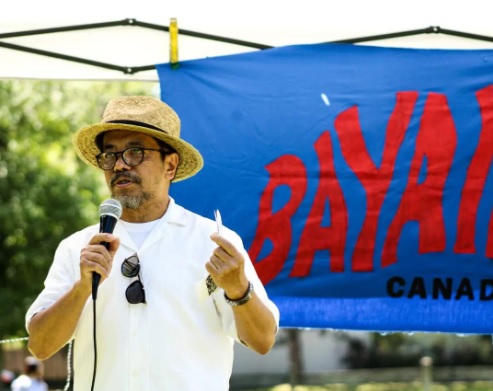
For many Filipina migrant workers, migration is not simply a choice. It is shaped by these larger forces—by economic pressure, by state policy, by histories of extraction and inequality. So what I want to share is not just a poem, but a reflection grounded in that reality— on migration as both survival and resistance. This is the reality that Silvia Federici helps us name—and challenge.”
Migration as a Political Act and Exit Strategy
We didn’t leave to chase dreams.
We left because we were pushed.
Pushed by debt.
By landlessness.
We didn’t leave to chase dreams.
We left because we were pushed.
Pushed by debt.
By landlessness.
By a system that makes survival a struggle.
The Philippines called us heroes—Bagong Bayani.
But heroes of what?
Of an economy that cannot sustain its own people?
We became exports—
maids, nannies, caregivers—
our labour stretched across oceans,
our care extracted and repackaged for the world.
Our work became the nation’s lifeline,
while our own families learned to live without us.
They say we migrate for opportunity.
But we migrate because staying is a form of slow violence.
Because war is not only fought with guns.
It is fought through hunger,
through displacement,
through policies that make life unlivable.
This is the quiet war on reproduction—
on our ability to care, to raise, to sustain life.
So we cross borders.
But the borders don’t end.
They follow us into the homes where we work:
no rest days,
no privacy,
low pay,
sometimes no freedom.
We raise their children
while ours grow up through phone screens.
We care for their families
while ours survive on remittances and absence.
They call it domestic work.
We call it survival.
We call it sacrifice.
But also—
we call it struggle.
Because even here, we organize.
In Hong Kong.
In Kuwait.
In Toronto.
In Manila.
We gather in parks, in churches, in community halls.
We build organizations.
We form unions.
We demand status, dignity, justice.
We are not just workers.
We are mothers.
We are organizers.
We are migrant justice defenders.
We are rebuilding life in the cracks of a global system
that depends on our displacement.
Migration is not just movement.
It is refusal.
Refusal to disappear.
Refusal to accept the conditions imposed on us.
It is a political act.
An exit—and a confrontation.
A way of saying:
“You may force me to leave,
but you will not take my voice.”