


By: Emerald Bandoles – PA Correspondent
TORONTO, December 9, 2025.– – On a snowy December evening at Toronto’s Mary Ward Centre, community members gathered to hear the experiences of five Canadian delegates who attended the International Migrants Alliance’s 6th Global Assembly in Kathmandu, Nepal. Founded in 2008, the International Migrants Alliance (IMA) is the first-ever global alliance of grassroots migrants, refugees, and displaced peoples.
Held from October 24-26, 2025, the IMA 6th Global Assembly brought together “164 participants from 28 countries, representing 125 organizations rooted in migrant and refugee struggles across the world”. The Assembly confirmed and approved 44 new organizations into the alliance: Africa (1), Asia-Pacific (19), Canada (8), USA (11), Europe (3), Latin America and the Caribbean (2).
The delegation from Canada had 22 individuals and 13 new organizations. “This is a product of organizing over the years,” emphasized Jesson Reyes of the Migrants Resource Centre Canada during the report back.
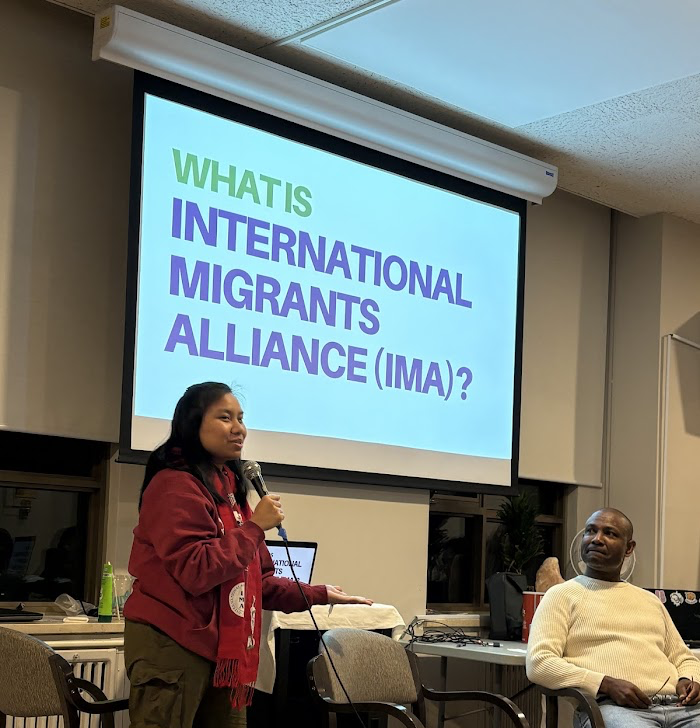
In his opening remarks, Gabriel Allahdua of the Association for the Rights of Household and Farmworkers shared how the Assembly demonstrated that migrants are a force to be reckoned with. He echoed the motto of the IMA: “For the longest time, others spoke on our behalf… now we speak for ourselves.”
Beth Baskin of The United Church of Canada reiterated that the energy felt during and after the Assembly was profound, conveying the message that despite the impacts of oppressive systems that place profit and plunder over people, “this didn’t push people down. Change can happen.”
Hannah Sabit of Migrante Canada added that the IMA highlighted the “power of solidarity of migrants over the world,” and the need to fight and build a society where migrants “are no longer forced to go abroad out of necessity, but out of choice.”
Emo Yango of the United Church of Canada shared that the Assembly fostered global camaraderie among migrant communities across Africa, Asia-Pacific, Europe, North America, and Latin America. He concluded that contemporary migration is not voluntary; rather, it is shaped by a global imperialist system that wreaks havoc through environmental destruction, wars, foreign interventions, right-wing repression, militarism, sanctions, and economic plunder- displacing communities and destroying their environments.
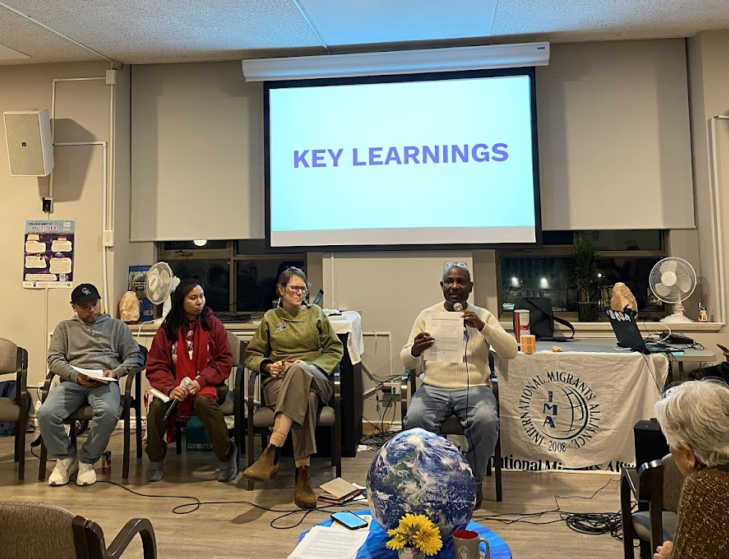
Key Learning: Migrants contribute valuably to the GDP of their home countries
One key learning discussed was the importance of migrant remittances to the Gross Domestic Product (GDP) of migrants’ home countries. Globally, remittances sent by migrants totalled US $857 billion.
Allahdua shared his disbelief upon learning about the plight of Filipino migrant workers and the impact of the Philippine government’s 51-year-old Labor Export Policy, which continues to push an estimated 7,000 men and women abroad every day. He noted that remittances from Filipino migrant workers account for nine percent of the Philippines’ GDP, totalling US $31.1 billion. Other labour-exporting countries such as Indonesia, have similar policies that dehumanize and exploit migrant labour. Allahdua described it as “disturbing” to learn that both host and source countries prepare migrants for the labour market but fail to adequately inform them of their rights as workers or protect those rights.
Key Learning: Migrants cannot stay silent in the face of Canada’s growing anti-immigrant sentiment
Delegates reflected on how Canada’s rising anti-immigrant sentiment contradicts its image as a beacon of openness and multiculturalism. Policies such as Bill C-12 create a culture of fear and scapegoat racialized migrants as the cause of housing shortages, skyrocketing rents, homelessness, and employment crises. Meanwhile, Canada continues to benefit from a low-waged migrant workforce, with little incentive to raise wages or improve working and living conditions. Recognizing this contradiction, Allahdua reminded attendees that migrants cannot remain silent; they must “organize to educate, and organize to liberate,” working to shape people-centred policies and ensure workers are not forced to leave their home countries simply to survive.
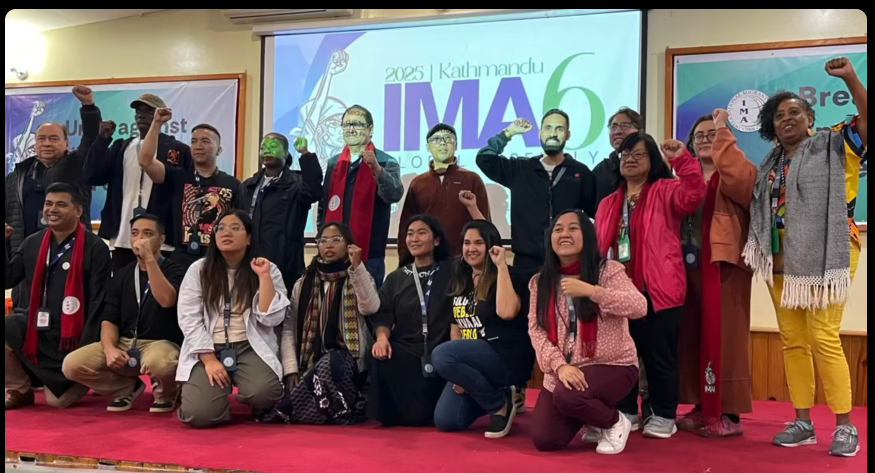
Delegates and migrant organizations responded earnestly to these calls to action, reaffirming their commitment to fight for a society that prioritizes migrants’ rights and dignity over profit and plunder – true to the theme of the IMA 6th World Assembly: “Defend Migrants’ Rights, Livelihood, Lives and Movement: Strengthen and Expand IMA, and Unite with Working and Oppressed People against Imperialism!” ###